Why Does Nigerian Tech Build So Much Fintech?
Half the companies sponsoring Moonshot 2026 sell financial services. I went through all 134 sponsors and dug into why Nigeria's tech ecosystem keeps building fintech, and what that means for every other sector.
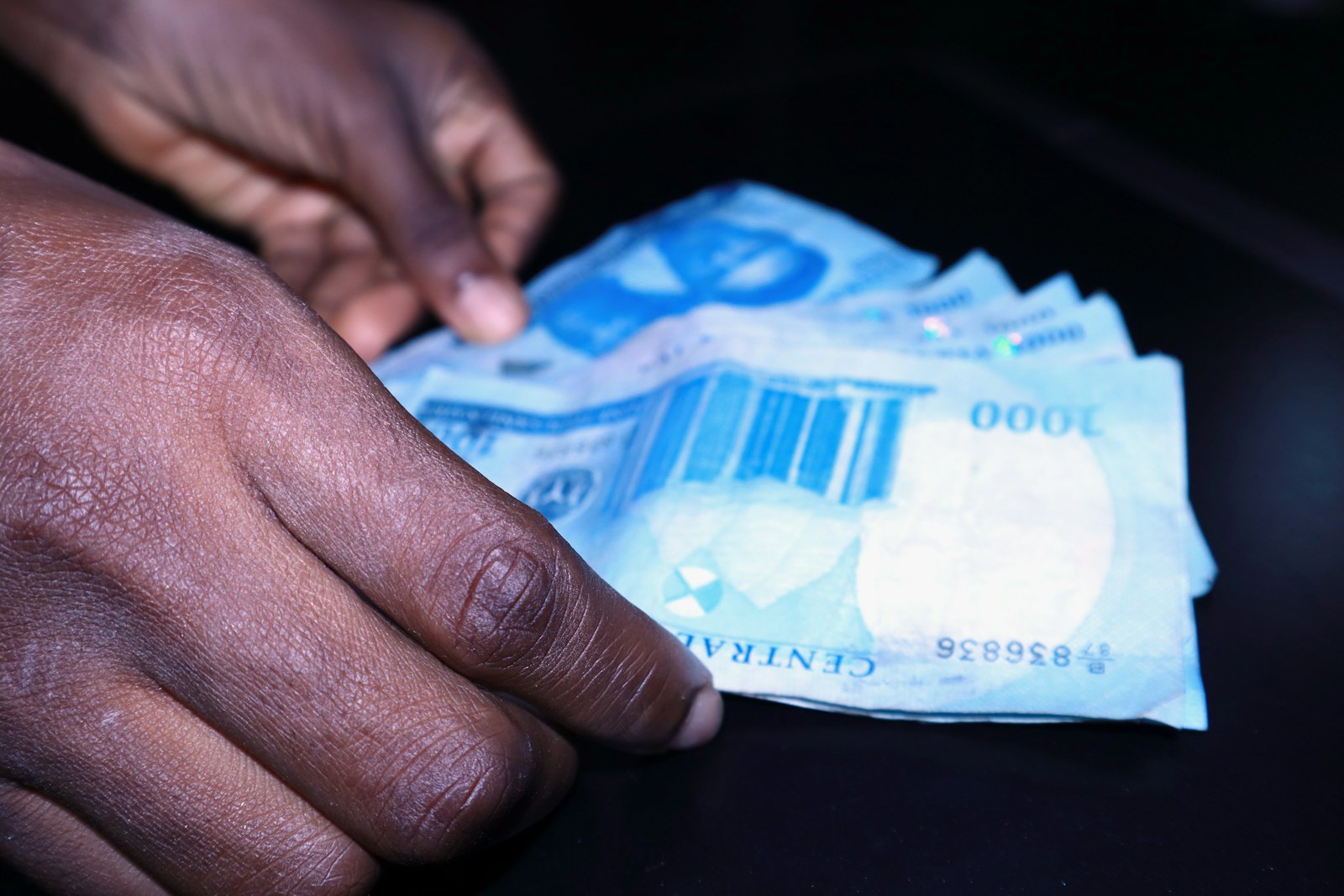
I was talking to someone about Moonshot, the TechCabal conference in Lagos. I've never been, but from the outside it looks like one of the most important events in Nigeria's tech calendar. While scrolling through the sponsors, I noticed that a lot of them were fintech companies.
I wrote earlier this year about how the Paystack Mafia has a fintech problem, meaning most of its founders went on to build fintech. Seeing the Moonshot sponsor list made me wonder whether that's true of the whole ecosystem. Fintech is a big part of why Nigerian tech exists at all, so this isn't a complaint about fintech. I wanted to know what's going on.
So I counted the sponsors, then went looking for the reasons.
What is Moonshot?
Moonshot by TechCabal launched in 2023. The 2025 edition brought together more than 5,700 participants, 210+ speakers and delegates from 39 countries. The 2026 edition ran on 28 and 29 October at the National Theatre in Lagos, with the theme "Courage & Conviction: Building for a New World."
It isn't a fintech conference. Its nine content tracks cover commerce, the creative economy, AI, government and policy, investors, startups, clean and climate tech, big tech and enterprise, and the future of money. Only the last one is about finance.
Who sponsored Moonshot 2026?
The Moonshot site lists 134 companies as 2026 sponsors. I checked what each one sells on its own website and sorted them into sectors. Leaving out 17 media partners and 6 companies I couldn't place, that's 111 sponsors.
Of the 111, 54 sell financial services, about half. That includes payment companies like Paystack, Flutterwave and Moniepoint, banks like Wema Bank and Providus, and a long list of newer apps. There are two health sponsors, WellaHealth and Zipline, one climate sponsor, Rivy, and no agritech companies.
Why so much fintech?
Some of the reasons are well known, and I went through them in the Paystack Mafia piece.
- A huge market of people outside the banking system. Nigeria still has about 40 million unbanked citizens.
- Phones everywhere. Mobile banking became normal fast, and the 2023 cash shortage pushed mobile banking transactions up by over 230% in a single month.
- Clear rules to build on. The Central Bank created licences and frameworks for new players, and Nigerian fintechs started by specialising in one product each before expanding.
- It makes money. One survey found 76% of Nigerian fintech startups were already profitable.
That's why Nigeria had the most fintech startups in Africa in 2023 and took 49% of the continent's fintech funding between 2019 and mid-2023. Fintech is also still Africa's biggest sector overall, though trackers disagree on the size: estimates for 2025 range from about a quarter of equity funding to around 38%.
Those reasons are true. But when I looked closer, three other patterns stood out.
Fintech earns when money moves
A payments company takes a small fee on money that was going to move anyway. People were always going to pay suppliers, send money home, buy airtime and pay rent. The fintech makes that easier and takes a cut. Every other digital business also needs payments, which is why one founder described fintech as "the railroad on which the tech ecosystem was built".
Many other sectors need someone to find new money first. A household has to pay up front for solar panels, a parent has to pay for a learning app on top of school fees, a small shop has to decide software is worth the monthly cost. Health care is a clear example: about 71% of health spending in Nigeria is paid out of pocket, and about 13% of Nigerians had health insurance in 2025. When customers pay for something new from their own pockets, growth tends to be slower and harder to predict.
The sponsor list shows how companies outside fintech work around this. Rivy, the only climate sponsor, provides financing for solar energy. WellaHealth offers HMO and pharmacy services through businesses. Bumpa, Zent and Khaime help small sellers run online stores, with payments built in. Many of them put a financial product, or a payment flow, near the front. Fintech built the rails, and other sectors are now building on top of them.
A lot of these fintechs sell dollars
This was the pattern I didn't expect. Of the 52 fintechs and banks on the list (the other two financial sponsors are development finance institutions), 15 are cross-border or FX businesses (remittances, multi-currency accounts, dollar cards for travel), like Raenest, Glo Currency and Timon. Another 14 are crypto or stablecoin platforms, like Busha, Obiex and Sentz. Together, that's more than half. You can see them in the pink and blue segments of the chart above.
The naira helps explain this. After the 2023 currency reforms, revenue earned in naira lost a large share of its value in dollar terms, and currency swings made it hard for investors to price risk. Most venture funding in Nigerian startups comes from investors who measure returns in dollars. If the naira loses half its value, a company earning in naira has to double its revenue just to look the same on a dollar spreadsheet.
Products that help people and businesses hold, move or earn dollars are in demand when the currency is unstable. My read is that the ecosystem responded to the naira's fall by building lots of ways to get out of it, and those companies have the revenue to show up at Moonshot.
Exits show investors what works
Venture capital looks for patterns, and African tech's best-known outcomes are mostly fintech. Seven of Africa's eight unicorns have been fintechs, and the biggest exits are fintech too: Stripe bought Paystack for over $200 million, WorldRemit bought Sendwave for $500 million and Network International bought DPO Group for $288 million, according to Data Bites. Nigeria's two fintech unicorns, Flutterwave and Moniepoint, are the companies new founders get compared to.
Those outcomes shape the next round of building. Investors raise new funds based on what worked in the last one. People who learned their craft at Paystack, Flutterwave and Moniepoint go on to start companies in the space they know best. That's how ecosystems grow everywhere: Silicon Valley's PayPal alumni did the same thing.
What about everything else?
The other half of the sponsor list is a mix: business software, online selling tools, mobility companies like Shuttlers and Yango, data centres like Rack Centre, universities like Miva and AI programmes like The Enzi Prize. Here's what recent funding data shows for some sectors beyond fintech.
| Sector | What happened recently |
|---|---|
| Nigerian health tech | Funding peaked at nearly $55 million in 2023, then fell to about $18 million in 2024 and about $3 million in 2025, with 128 active startups |
| African agritech | About $169 million across 87 deals in 2025, with Nigeria second at $29.6 million |
| African cleantech | About $308 million in 2025, roughly 20% of investor funding |
| African mobility | About $146 million in 2025, anchored by Spiro's $100 million round |
Across Africa, the money is spreading out. Fintech's share of funding fell 14 percentage points between 2023 and 2025, and cleantech and mobility picked up a lot of it. A lot of that growth happened outside Nigeria, though. Briter puts Nigeria's share of African funding in 2025 at its lowest since 2019, even though it had the most deals.
Some sectors grow in waves tied to a moment. Nigerian health tech, for example, boomed during COVID-19 and slowed once the urgency faded, according to the State of Healthtech in Nigeria 2026 report. Fintech has had a steadier pull, because people move money every day whether there's a crisis or not.
So what's happening?
Here's my best answer. Nigeria has so much fintech because fintech solved the first problem every digital business has, which is moving money. It earns from flows that already exist, its customers have been asking for ways to protect themselves from a falling naira, and it has the exits that teach investors and founders where to go next.
Other sectors have different starting points. Energy, education, health, commerce, mobility and AI each have their own customers, costs and timelines, and many of them need customers to find new money, investors who are comfortable with slower growth, or infrastructure that's still being built. Plenty of founders in those sectors are now building on fintech's rails, through financing, insurance and built-in payments, to reach customers.
What I'm curious about is what the sponsor list looks like in five years. If the naira steadies and more of these sectors find customers who can pay, will the wall in Lagos look more mixed? Or will more of those companies end up looking like fintechs themselves? If you work in Nigerian tech and see it differently, I'd love to hear from you.
For more on the ecosystem, see my pieces on the $79 million lost in recent Nigerian startup shutdowns and Nigerians in the age of AI.
Cover photo by Sunday Abegunde on Unsplash