What Worked in GTM in 2026, and What Didn't
Twelve marketing insights from a Growth Meetup panel in Warsaw, from AI search and creator pricing to cold outbound and picking your first customers.
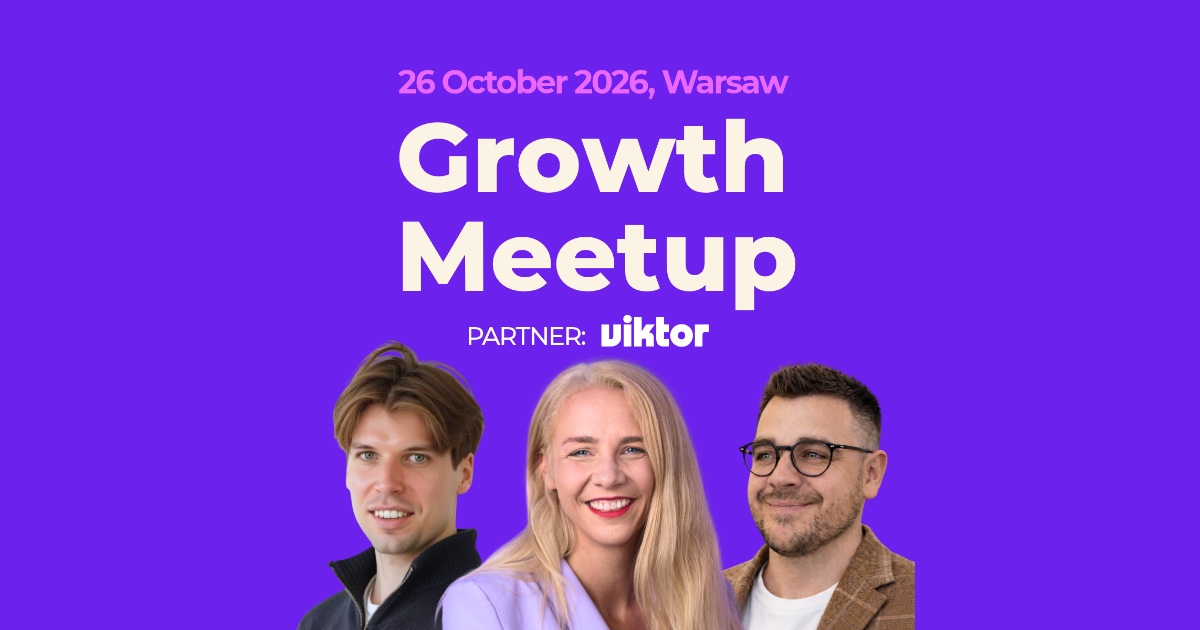
On Monday I went to Growth Meetup's "What's Next in GTM" panel in Warsaw. Maja Voje, author of Go-To-Market Strategist, was on stage with Nazar Mozhovyi, who leads partnerships at the startup hosting the event, and Antoni Olendzki, who leads growth there. Barbara Derkowska-Podhajska moderated, and the audience got pulled into the discussion in the second half.
The brief was what worked in go-to-market this year, what didn't, and where it's heading. These are the marketing insights I came away with.
The short version
- Half of GTM teams now say their AI spend pays off, up from 14% last year.
- With AI content everywhere, proof (templates, workflows, real results) is what gets attention.
- Budgets for AI search are about to double, and LinkedIn and YouTube matter more for it.
- Even AI products still need people to sell and explain them.
- Pay for creator posts against a benchmark, but don't ignore what trust is worth.
- Cold outbound is still alive. It just isn't only email.
- Choose your first segment with four tests, and start with networking and cold outreach.
1. AI is finally paying off for most teams
Maja runs a yearly survey of GTM teams with Kyle Poyar. Last year, 14% said they'd seen any return on their AI spend. This year it's 51%.
A year ago people were still asking whether AI would turn out like crypto. Now about half of teams can point to a return, and token costs keep falling.
2. Proof cuts through AI content
When anyone can generate content, good content gets rarer. In the launches Maja worked on this year, what got attention was something concrete:
- a template people could use
- a workflow they could copy
- a result they could check
One post walking people through building their own "AI brain" got around a million impressions. Her advice: lead with something you've done and can stand behind, and skip the inflated hooks.
3. Plan for AI search on LinkedIn and YouTube
About half the teams in Maja's survey plan to double their AI search budgets for 2027. She said AI answers are drawing less on Reddit and more on LinkedIn and YouTube, so content on those platforms now works for search as well as for your feed.
4. AI products still need humans to sell them
Barbara asked each panellist what they believed in January that turned out to be wrong.
- Antoni expected their AI product to grow through self-serve alone. Instead they're hiring salespeople, because most people still want a human to walk them through it.
- Maja expected design and brand to be the moat, and hired designers early in the year. By autumn, a lot of that work had moved into code.
The takeaway: don't assume AI removes the need for people in your funnel. For many buyers, it adds one.
5. Price creator deals with a benchmark, but count the trust
The panel shared two thoughtful views on paying for creator partnerships.
Nazar benchmarks creator placements against paid-ads CPM, the cost per thousand impressions. A creator placement is worth more than an ad, and his rule of thumb is up to about double. This gives him an objective starting point for negotiating, and a way to defend every dollar.
Maja's view is that B2B adds things a monthly CPM can't fully capture:
- buyers take months to decide, and a good post stays with them (she still remembers a banner Elena Verna posted six months ago)
- a creator who vouches for you is putting their own reputation on the line
- some deals work better when both sides share the risk
The useful lesson is to use both: a benchmark to keep spending disciplined, and judgement about the relationship and the long buying cycle.
6. Pay your users to share their results
The host startup puts more into user-generated content than into influencers. Users earn product credits for posting about what they've done with it, and the company can reuse those posts in ads. A small account showing a real result often comes across as more believable than a big account reading a brief.
7. Cold outbound is still alive, but not only by email
Barbara read out statements built from our registration forms and the room voted. "Cold outbound will be dead for B2B by the end of 2027" got mostly disagreement.
The reasoning:
- AI filters may catch more cold email, but they don't stop phone calls, direct mail or visiting someone in person
- millions of small businesses are barely online, so you have to go to them
- noise keeps growing, so the bar for good outreach keeps rising
One attendee even predicted people will start charging to receive cold pitches.
8. Pick your first segment with four tests
Maja's framework for choosing who to target first. The segment needs to pass all four:
- Urgent pain. Not "maybe next quarter" but "where have you been, I needed this yesterday."
- Willingness to pay. People will praise your weekend project. Ask for $10 and see what happens.
- Relevant references. Buyers trust peers. A bank doesn't care that a salon in Texas loves you.
- A healthy market. You want customers who stay, not early adopters who move on in three months.
If you have data, work backwards from the customers who stay and pay. If you don't, write down five to seven guesses about who your buyer is and test them one at a time.
9. Under $1M in revenue, start with networking and cold outreach
For companies under $1M in annual revenue, Maja's data ranks networking and partnerships as a top channel, followed by cold outreach. Her reasoning for outreach: "you can afford seven inboxes."
Nazar added two things to weigh before picking a channel:
- Cost to test. You can't learn anything about Meta ads on $100.
- Time to build. Partnerships are the slowest channel to get going.
Maja also separated two situations. If people already know they have the problem, ads can capture that demand. If you're creating a new category, you need to educate first, which usually means LinkedIn content and early references.
10. When the user isn't the buyer, sell to the budget
A founder selling software to volleyball coaches asked how to win over club directors, who hold the budget but don't use the product. The advice:
- talk to the director about cost and return, not features
- write the pitch for your users so they can forward it upwards
- show how many people in the organisation already use it
- spell out what they'd lose if they stopped, in time or money
11. Skip the booth, host a side event
In Maja's survey, small in-person events rank among the best channels for return. Big conferences mostly pay off for enterprises chasing large deals. If you're a smaller company, you're unlikely to stand out among 10,000 people, so host a dinner or side event nearby instead. The host startup follows the same rule: they only attend where they have a speaking slot, and run a side event alongside.
12. The fundamentals still hold, only faster
Someone asked whether all of this is just the old fundamentals with AI on top. The panel broadly agreed: you still need something people want, at a price that works. What's changed is the pace, and how much more is expected from every team.
Maja's tip for Monday morning was to update your LinkedIn profile. Even when you cold-email someone, they'll look you up and decide in a second whether to trust you.